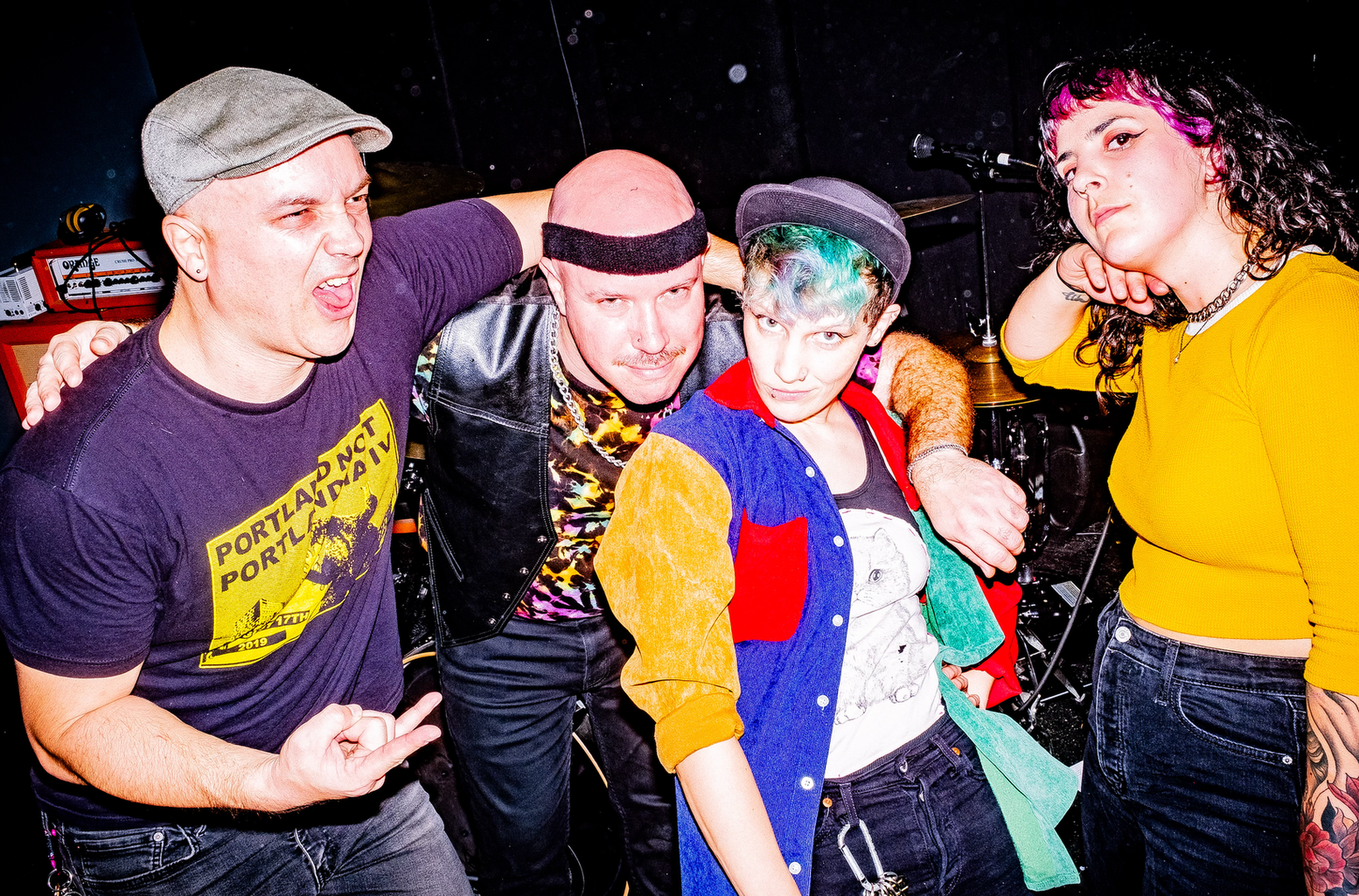



Punk has always thrived on discomfort. Not because it enjoys chaos for its own sake, but because the genre has long served as a place where frustration, anger and disillusionment can exist. Triple Lutz understand that tradition better than most, as their debut album doesn’t attempt to soften its message or make itself more palatable. Instead, it embraces confrontation as a necessary act of survival.
The Portland quartet have spent the better part of a decade carving out a reputation within the Pacific Northwest punk scene, proudly branding themselves as the world’s only “Tonya Harding-core” band. It’s an introduction that immediately tells you two things: they don’t take themselves too seriously, and they’re perfectly happy making everyone else uncomfortable.
That balance between humour and hostility defines much of In the Hands of an Angry Mob, as the record pulls from the relentless pace of early-’80s hardcore and the precision of technical punk, delivering songs that rarely pause long enough for listeners to catch their breath. But beneath the breakneck riffs and shouted choruses lies something more thoughtful than simple rage.
Across the album, the band explores the themes of hypocrisy, climate anxiety, injustice, mental health and the exhausting reality of trying to navigate modern society without becoming numb to it. These aren’t abstract political slogans shouted over distorted guitars. They feel lived in. Personal. The frustrations of people trying to reconcile compassion with a world that increasingly rewards outrage.
That tension is perhaps best captured in Don’t Wake Daddy, which is a highlight of the album. At first glance, the song feels almost deliberately absurd. Skateboarding, pop culture references and irreverent humour create an atmosphere that borders on chaotic fun. Then, almost without warning, the song pivots. The lyrics begin questioning religious authority, institutional hypocrisy and the performative nature of morality. Images of halos made from thorns and repeated warnings to “run” transform the track from playful satire into something considerably more biting.
Rather than preaching, Triple Lutz expose contradictions through the song, as it asks uncomfortable questions about who holds power, who claims moral authority and what happens when those two things no longer align. The band’s anger never feels directionless, as every burst of aggression is anchored by a genuine desire to understand the systems they are criticising, whether that’s organised religion, online outrage, institutional power or the expectations society places on individuals simply trying to exist.