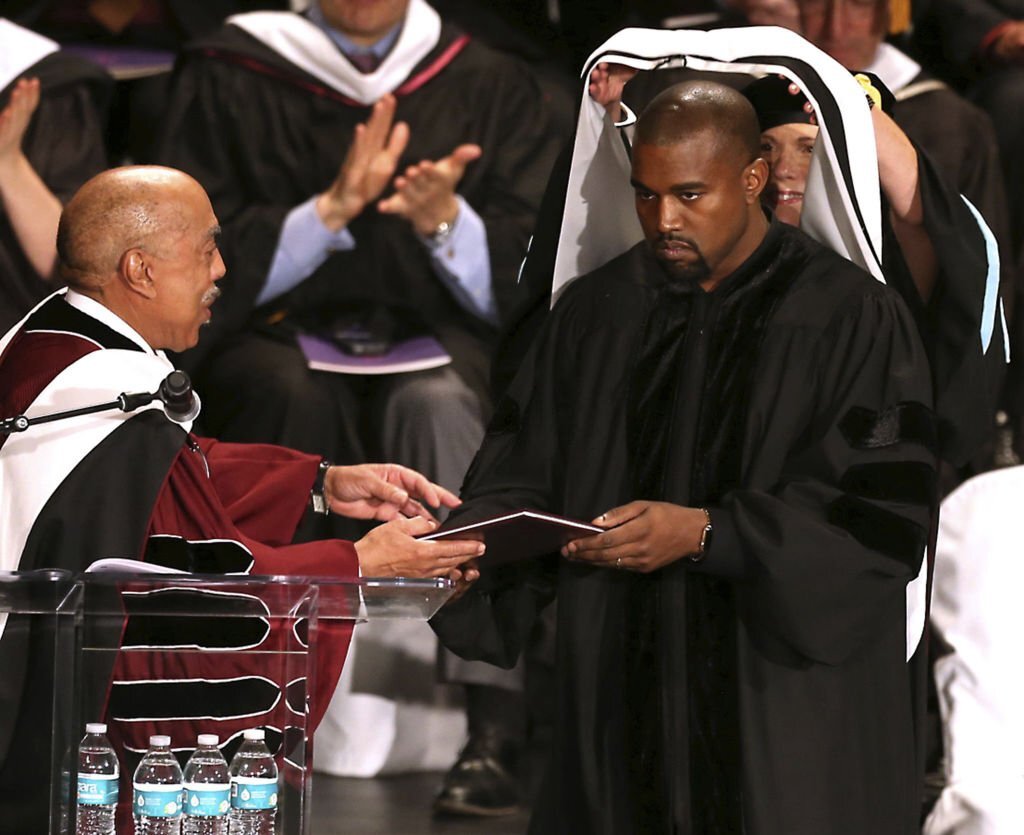



The recent decision to deny Ye (formerly Kanye West) entry into the United Kingdom – ultimately leading to the cancellation of the Wireless Festival altogether – has reignited a familiar cultural tension: where do we draw the line between accountability and access?
There is no disputing the context. Ye’s past antisemitic remarks have been widely condemned, and rightly so. Even festival organisers acknowledged that “antisemitism in all its forms is abhorrent,” while political leaders described his booking as “deeply concerning.” These are not trivial criticisms, and they should be dismissed.
But the question at hand is not whether Ye’s statements were offensive – and there is no doubt that they were. The question is whether denying him the ability to perform is the appropriate response, particularly in a cultural environment that has long positioned music as a space for confrontation, contradiction, and dialogue.
The UK’s immigration framework provides the legal mechanism for such decisions, such as through the Electronic Travel Authorisation (ETA) system, which allows authorities to assess travellers in advance and refuse entry if they are deemed a risk, including on grounds related to public good or safety. In Ye’s case, his ETA was initially granted and then withdrawn after further review, with officials determining that his presence would not be “conducive to the public good.”
Legally, the decision is sound. Culturally, it is far more complicated…
Music has always been a space that tolerates, and often depends on, difficult voices. From punk to hip-hop, entire genres have been built on challenging norms, provoking audiences, and forcing uncomfortable conversations into the mainstream. To remove an artist from that space entirely is not just simply a logistical decision – it is a curatorial one. It determines not just who performs, but which conversations are allowed to take place in public. Even within the controversy, there were indications that performance and platform are not necessarily the same thing. The Festival organisers of Wireless were explicit in saying that Ye was being invited “only to perform the songs… listened to and enjoyed by millions,” not to use the stage to promote his views. This distinction matters. It suggests that art can be separated – at least in part – from the individual, or at minimum, that audiences are capable of making that distinction themselves.
There is also precedent for reconsideration. Artists such as Tyler, the Creator and Snoop Dogg have also previously been barred from entering the UK, only to have those restrictions lifted later. Cultural institutions, like legal ones, are not static, as they evolve, often in response to the very controversies they attempt to contain.
Perhaps the most compelling argument for allowing Ye to perform is not about endorsement, but about exposure, as suppressing controversial figures rarely resolves the issues they represent – and can often entrench them further. By contrast, allowing space for performance, within appropriate boundaries, creates the possibility for dialogue, critique, and, in some cases, accountability. Ye himself has indicated a willingness to engage, stating a desire to “meet and listen” to members of the Jewish community. Which is he already kind of done. Whether that intention is sufficient or sincere is open to debate. But shutting down the opportunity entirely removes any chance for that conversation to occur in a meaningful, public way.
None of this is to suggest that platforms should be granted without scrutiny, and they shouldn’t. However, there is a difference between scrutiny and exclusion, between accountability and erasure. In a cultural environment that prides itself on openness, denying performance rights risks setting a precedent where artistic access becomes contingent not just on legality, but on acceptability – a far more subjective and unstable measure.
There is no doubt that Ye is a controversial figure – that much is clear – but controversy, in itself, has never been grounds for silence in music. If anything, it has often been the catalyst for its most important moments. The real question is not whether Ye should be allowed to perform, it is whether we are prepared to engage with the discomfort that comes with letting him express his art.