


Alison Wonderland has always built worlds—self-contained, emotionally charged, often chaotic, always cathartic. But Ghost World, her fourth studio album, feels like the moment those worlds stop orbiting around her and start expanding outward, pulling an entire community into their gravity.
Spanning 14 tracks, the album is Alison Wonderland at her most confident and compositionally adventurous, sharpening threads she has teased across the years: introspection, chaos, resilience, defiance, and the relief that comes when the bass finally drops the weight you’ve been carrying.
Fans of her earlier evolution – from the cinematic emotional rebuild of “New Day” to the assertive reclamation of Loner – will recognise her thematic DNA here. Alison Wonderland has long used albums as time capsules, letting each one chart a new chapter of personal metamorphosis. But Ghost World is something different: it’s a home she’s built for the people who have been rebuilding themselves alongside her.
Written during a period of major personal and artistic change, the album turns dislocation into architecture. Alison Wonderland frames the record as a refuge – an imagined place for misfits, ravers, outsiders, and anyone who has ever tried to dance their way out of a difficult chapter. “I often feel like I’m wandering this earth trying to find my home,” Alison Wonderland says, and that sentiment threads through the album’s emotional core. If Loner was about reclaiming one’s narrative, Ghost World is about creating a new one altogether—brick by synth, heartbeat by sub-bass.
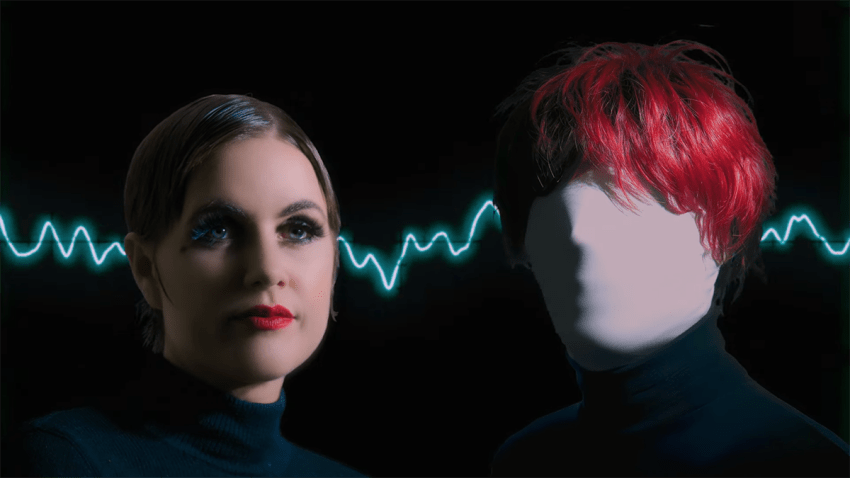
One of the album’s sharpest statements arrives via “Heaven”, her blistering collaboration with Ninajirachi. Alison Wonderland has always had a knack for identifying (and championing) future-shaping female talent—her work with emerging artists has been a through-line since the early Awake days — but “Heaven” feels like a meeting of equals operating at full speed.
The track [Heaven] opens in a shimmer: crystalline synths that stretch upward before snapping into high-energy propulsion. Alison Wonderland layers her signature atmospheric touches—pitched vocals, intricate percussion, the sense of a storm forming just outside the frame—while Ninajirachi threads through the mix with a hyperpop-leaning sharpness that gives the song its dual edge. The result lands somewhere between experimental club music and widescreen electronic pop, a hybrid with both gloss and grit.
What underpins the project, though, is Alison Wonderland’s ongoing willingness to be transparent about the messy middle of transformation. From what I have gathered in my past coverage of Alison Wonderland on Eat This Music, Alison Wonderland has consistently framed her work as a kind of emotional exorcism – whether navigating “dark melodic rhythms” with MEMBA, or rebuilding after personal upheaval. That honesty remains intact here.